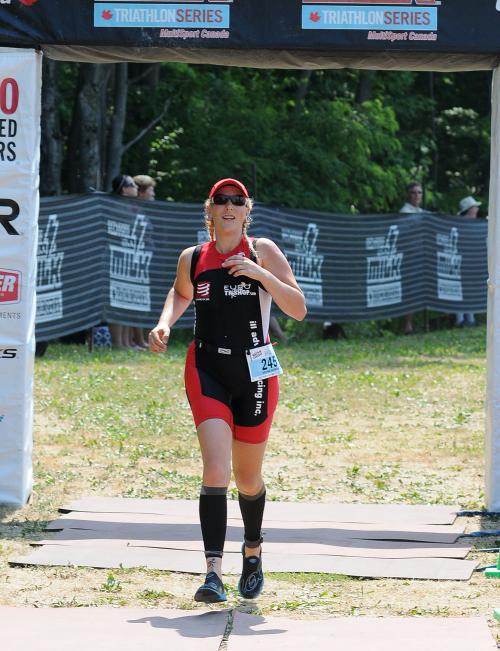
Friday, January 11, 2013

Tested: Craft PXC Storm tights

Just as we get a break from the cold, snowy weather here in Southern Ontario, this week I'll be reviewing the Craft PXC Storm tights.

Stock photo in black - mine are "pipeline", a medium grey.


What they are: Lightweight yet warm and windproof tights for winter aerobic activities.

Why you want them: Because -30c is no reason to miss a training session. Run, nordic ski, snowshoe or cycle in comfort during the worst of winter weather!

Front, showing the overlapping articulated construction of the knees.

Back - everything above the first band of piping is soft, warm, stretchy fleece.

Duration used: 1 year (purchased sometime over the winter of 2011/2012)

Price paid/purchased from: I paid approx. $120USD buying direct from craftsports.us (available for men or women).

Ankle zips and rubbery grippers.

Internal pocket and drawstring.


What rawks: I'm a total wuss about cold, yet I am a staunch advocate of getting outside in winter to enjoy the beauty and stillness of a world painted white with snow. This disconnect is resolved through the application of really good clothing to protect my sorry butt from the cold wind and frosty temperatures, and these tights are about the best thing I've found! Trust the Swedes when it comes to cold weather gear, particularly a company chosen as the apparel supplier to the Swedish national nordic ski team. While the tights are ostensibly made for cross-country skiing (the "PXC" designates Performance X Country collection), they work great for running, snowshoeing or cycling (worn over a pair of shorts or bibs with a chamois), or any other aerobic cold-weather activity you can think of. Fleeced on the inside throughout, the entire front and lower part of the back of the legs is covered with a smooth, soft windproof fabric that moves without restricting you - even the knees, a perennial bunching point for windproof wear, flex effortlessly thanks to an ingenious overlapping layer contruction. From the back of your knees to butt on the back you're covered with a smooth-faced material that's as thick and toasty warm as your favourite sweatshirt, but which breathes and allows you to dump excess heat. You really will appreciate the ventilating when you get moving, too, as these tights are warm. Really warm. Don't wear them unless it's below the temperature at which water gets all hard and slippery, but do wear them when even polar bears are hiding in caves because they're finding it a bit too nippy for their tastes. I've seriously run in these at -30c with windchill somewhere around absolute zero and not had cold legs afterward, though I had to look to make sure my fingers hadn't fallen off. The fit is more like a narrow pant than a clingy pair of tights, so you could even throw a base layer underneath if you were going nordic skiing on Pluto or something. I have had no issues with the pants riding up, and an inner, flat drawstring at the waist prevents them from drooping. They're quite high cut, which should help prevent any gap between your jacket and the pants while you're in motion - a boon if you want to use them for cycling. Other touches include a small inner pocket at the front right-hand side of the waistband for a key and a bit of emergency cash, rubbery grippers at the bottom hems, and useful-length ankle zips that let you get tall socks or boots on without fuss. For their warmth they're very lightweight, and the windproofing is really effective. You won't really notice them at all while you're out training, you just won't be cold! Other people will notice you, though; there are plenty of reflective elements to keep you safe during the long dark of winter.


Inside of knee showing articulation.

Outside of lower leg.


What sucks: The ankle opening is too large and gapes a bit, and the inseam is too short for my (admittedly ridiculously long) legs - this means I either have to wear very tall socks or deal with frostbite from skin exposure, and snow will occasionally get tossed up the bottom of the legs. I can solve the problem by wearing gaiters, but I feel like winter tights should err on the long side. The fit is a bit odd - I enquired with customer service before ordering my pair as I seemed to be on the border of size small or medium, but didn't want the legs to be restrictive to my super-sized thighs (I'd tell you it's all powerful muscle, but I'd like you to be able to stop laughing long enough to read the rest of this review). I was told to go with a medium to get the extra leg room, and I'm glad I did; the thighs fit fine and I sure wouldn't want an inseam any shorter, but the the calves near the top of the ankle zips are very snug. I don't have unusually large calves, so the fit is a bit puzzling - it may be an effect of the short inseam. The waist and abdominal/crotch area are rather baggy on me, too, and since the seams are not flatlocked this can lead to chafing unless I wear a layer underneath (tri/compression shorts work a treat). The inner pocket is a bit laughable in size - you could probably get a key and a $20 bill in there, but nothing more, and I don't think it would fit even the smallest single-serve gel packet. If your snowshoes tend to chuck snow up the backs of your legs (like mine), you may end up with snow sticking to the back of the tights, getting you wet and chilly. The construction of the knees results in some odd contours around the calves and combined with the potbelly-accommodating abdominal tailoring the overall look isn't terribly attractive.

Reflective piping and logos - but not all of the piping is reflective.

A bit baggy here and saggy there.
The tights could fit better, too.
What I'd like to see: A longer inseam, more fitted ankles, relaxed calf diameters, a little better tailoring in the abdominal area and flat seam construction.

What I'm saying: When winter gets all Armageddon-y, I pull these tights on and run, ski or cycle in toasty warmth. If you hate treadmills and love the briskness of a howlingly cold day spent crunching over snow and ice, you absolutely need to treat yourself to a pair of these. They may not be the most flattering thing you'll ever wear, but I'm more concerned with staying warm than looking good!

No action photos - the conditions I use them in would freeze a camera!

For further edification: See the review from Fleet Feet Chicago, or this one from All Seasons Cyclist.

Update February 2019: I continue to wear these tights in nasty weather, but have found them much more comfortable (and much more pleasant to re-wear without washing, when necessary) if I wear a pair of compression-type running shorts underneath them. They are still going strong, however they are starting to show significant wear in the area between the legs.

Just behind the windproof front face fabric.

I fear the soft, breathable fabric may soon separate from the windproof fabric at the seam.

If you have less thigh chub rub than I do, you may not have this issue. In spite of it, they're still one of my all-time top 10 pieces of running kit for cold climates.


Friday, January 4, 2013

Tested: Endomondo sport tracking app

This week's review: Endomondo sport tracking app for mobile devices.


What it is: An application for GPS-enabled mobile devices that tracks your activity.

Why you want it: Because you're not type-A enough to use Strava (or don't use Android/iOS), but still want a neat tracking app that allows you to compete against your friends. Additionally, you can use your tracked activities to accumulate credits at earndit.com and buy yourself stuff for the workouts you're doing anyway (UPDATED January 2015: earndit has since become higi, but you can still earn rewards)!

What it looks like on the BlackBerry Torch 9800 (not my data).
The fields can be customized to show different metrics in the location you choose.

Workout options.


Duration used: 8 months - started in May 2012.

Price paid/purchased from: I use the free version for BlackBerry. The Pro version with additional capabilities is $4.99, also available from BlackBerry App World. There are Android, iOS, Windows Phone and Java versions in both free and pro, too - all download options are available here.


Reviewing data once your workout is complete - tap on the map to show the route in full screen view.

It even gives you mile-by-mile (or kilometer) splits.
You cannot manually change the lap distance, though.

What rawks: It's completely functional for tracking and logging in its free form, and provides some useful data through the reports on the website without upgrading to pro. It covers a massive range of activities, including difficult-to-track ones such as paddling and skating where it's tough to know what kind of distance you've really covered, and has the option to manually input workouts that the GPS can't pick up (e.g.: yoga, weight lifting, aerobics, team sports) - it even allows you to distinguish between walking, fitness walking and hiking; or between sport cycling, cycle commuting and mountain biking. The interface is easy to use and customize to show the data you want in the location you want - the screenshot above is basically the default layout with heart rate (that field shows calories burned if no heart rate monitor is used). I also like that it allows you to use the BlackBerry trackpad instead of having to rely on touchscreen only; several of my favourite pairs of gloves are not touchscreen compatible, but the trackpad is easy to use with them.You have multiple options for audible accompaniment:  you can choose any playlist from your device to listen to during your workout, via either headset or the device's speaker, and if you choose to use the "audio coach" (which gives distance, time and split updates) it will briefly pause the music to provide you with data then continue playing the song where it left off. If you're less than keen on having a female voice periodically interrupting your reverie, you can operate with all sound off - I leave it this way, as I don't generally train with music, but you can use the coach without a playlist as well. To start your workout, you can either tap the "start" button or "countdown", which allows you to specify an interval (from 10 seconds up to 40 seconds) between the time you hit the button and when the clock begins; useful if you're wearing gloves or need to stow your device in a pocket before you set off. Even with all other audio turned off, a voice will say "go" when the countdown reaches zero and you're officially on the clock. There is an auto start & stop function you can enable in settings that will (theoretically) start recording once the app detects you moving over a certain user-defined rate of travel and stop it once your speed dips below this level, but I've had little success with this feature. The learning curve with the app itself is very shallow, though - once downloaded and installed, you'll find it easy to start tracking workouts in seconds. While you're out, friends on Endomondo can send you "pep talks" through the website, and even watch your progress if you've enabled live tracking. Furthermore, if you set the app to automatically upload data to Facebook, your social media friends can watch you move and comment on your activity (UPDATE January 2015: the app for Blackberry OS 10.3 does not have any social media functionality). The live tracking is also fabulous if family members are worried about you, because they can pull up the website and see your location and whether or not you're still on the move! If you're more competitive, you can choose to race against friends or the current champion of a particular route a la Strava. When you're finished with your training session, the app automatically uploads your recorded data to the website (http://www.endomondo.com) for perusal (if you're in an area with poor coverage, you can re-upload if the first attempt fails). Time of day, distance, duration, elevation, average and maximum speeds, weather and calories burned are given in text format along with a map of your route and graphs for pace and elevation. Clicking the "best distances" shows your performance within that workout with best kilometer, mile, 3 mile, and 5km times, plus the "Cooper" - distance covered in your fastest 12 minutes. If you regularly perform a time trial on a certain route (as long as conditions are reasonably similar), you can gauge fitness using these metrics. If necessary, you can edit almost all data fields, and you can add notes and names to your training sessions. The social aspect of the site is kind of fun, too; you can see what your friends have been doing and make comments on their workouts, as the dashboard shows a Twitter-like feed of friends' activities. There are frequent challenges made available to members as well, typically in which a number of prizes will be awarded to a participant with your chances to win increasing as you burn more calories or track more mileage - if you need motivation, these might help get you out the door. If you choose, you can post workouts to Facebook, Twitter or BlackBerry Messenger as well (UPDATE January 2015: unless you are using the Blackberry 10 version, which has no social media integration).


Calendar format training history on the website - hover over a workout symbol to see basic time/distance info or click to display full details as below.

Individual workout view on the website - the calendar view remains visible further up the page.
Running your mouse over the speed/elevation graph shows moment-by-moment data samples and indicate the position on your route at which they were recorded with a moving red dot.

What sucks: Maybe it's just my particular phone, but the GPS tracking leaves a lot to be desired - it most commonly cuts corners on my routes reducing the distance (and making me look even slower than I already am), but occasionally gets confused and goes on some kind of wild tangent that messes with my data. Because of one of these "I'm over here, NOW I'M 2KM AWAY, now I'm back!" bursts, my personal best 1 hour run shows as something like 17km and my best kilometer time is about 37 seconds. This is not useful, and despite being able to edit individual workout data, I can't seem to be rid of some of these ridiculous readings. (UPDATE January 2015: this is much improved on my Blackberry Classic running OS 10.3 with location services turned on). The GPS can take some time to locate, and sometimes refuses to do so at all without backing out and re-starting the app (particularly when changing the workout type upon opening it). (UPDATE January 2015: this is also greatly improved in the Blackberry OS 10 app, and even shows GPS status whether "excellent", "moderate" or "poor" signal is available) The auto-start & stop feature seems to be completely useless as well, as I've yet to see it respond to my actions in a reasonable amount of time - likely related to the apparent difficulty in accurately tracking a route through poor GPS performance overall. Being unable to specify a lap distance is annoying - kilometer or mile splits are fine if you're doing kilometer or mile repeats, but for any other kind of interval workout they're pretty useless (and even kilometer or mile repeats would rely on you starting at exactly X.00km/mi with precise recoveries). The "pause" button also annoys me in that the clock appears to stop, but the time while paused still gets added in to the split for that kilometer (i.e.: if you pause it while taking a drink at a water fountain for 1min, the kilometer in which you did so will show a split 1min longer than your moving time). I can't see the purpose in it at all. I'm told you can't manipulate your playlist within the app (no pause/skip), so if you're dying to hear a particular track at a certain time you may be out of luck. You may also be out of luck if you need to make a phonecall after a long workout, as the app eats battery life like nothing else I've seen.

History view on the website.

Total training overview on the website.
Month and overall view from the website's dashboard.


What I'd like to see: Better GPS functionality (UPDATE January 2015: whether it's an improved device, having location services turned on - which I'm not sure they were on my Torch - or an update to the app, this is no longer an issue on my Blackberry Classic running OS 10.3), a useful auto start/stop feature, and a "lap" button to override the automatic kilometer/mile splits, a true workout pause and a way to remove spurious data completely so it doesn't affect best performances (UPDATE January 2015: you can remove and edit workout data through the web-based dashboard).

What I'm saying: Being free, there's no reason not to give this a try, but I'm too anal retentive to rely on this as my sole recording method for workouts. I still use my trusty stopwatch as well, and check distances using the Gmap Pedometer website where possible. I do, however, find the app very useful for big training blocks like long weekends - I use 2 other websites for logging workouts (LogYourRun.com and Slowtwitch's training log), but tend to only enter data from the office. If I use Endomondo to record my data, I never have to sit there scratching my head on Monday trying to remember which particular route took me XX minutes (per the saved workout on my watch) the previous Friday. Additionally, I know my husband really appreciates being able to use the live tracking on longer workouts or in dicey conditions to know that I'm still on the go and to estimate when I might be getting home. I'm still far from using the app for every workout, but I do find myself starting it more and more often, especially now that I have linked it to my earndit account and accrue credits for my activities!

For further edification: See other reviews by SlimTechie, AppSafari, and SportsTechReview.

Friday, December 28, 2012

Wrap it up, 2012.

Since I foolishly did not take (even very bad) photos of any gear this week, you're getting a different kind of review - the ubiquitous, self-centred look back at my year. Just grit your teeth and hang on; I'll try to make it quick.

Snowy trail, but I'm in shorts on January 7th!


January: Groin injury sustained during a particularly nasty run in the snow. Thought it could be anything from a torn hip labrum through a femoral neck stress fracture. Still don't know what it was, exactly (never saw a doc), but took 10 days off from running and commenced regular lateral hip strengthening exercises. Whined a lot.


Dorking it up at the indoor tri in February.


February: Slashed my toe open in the pool a couple of days before the Runner's Den Indoor Sprint Tri. Raced, had fun, and really surprised myself with the pace I was able to maintain on a 5k course that's basically one giant hill, run down and then up twice. Also started the blog, much to your chagrin.


Just me and my buddies at Around the Bay in March.


March: Managed to keep from re-injuring myself during a tightly compressed mileage build for the Around the Bay 30k, at which I like to think I acquitted myself admirably considering I'd been ready to sell my bib just a month or so beforehand (see: January).


Muddy at the finish line in Ancaster in April.


April: Went every so slightly faster at the Paris to Ancaster 60k than the year before. Have convinced myself that the improvement of only 5mins is due to the course being tougher this year than last (with the substitution of a muddy country lane for a stretch of dirt road). No excuse has been found for finishing near the back of the pack, though.


Heading out of T1 at Woodstock in May.


May: A spectacular 10k PR at the Mudpuppy Chase and the triathlon season kickoff in Woodstock! I probably had more fun in May than any other single month this year.


Racing for my Dad at Welland in June.


June: This is the month that nearly did me in. Our bedroom ceiling collapsed, requiring about $6,000 in roofing work and new bedroom furniture. I barely made it through the 160km Tour de Grand on the hottest day of the year, and to top it all off my Dad passed away suddenly on Father's Day. The only good thing that came out of June was my rather breakthrough performance at the Welland Triathlon, blowing away my prior times on that course.


Finishing a tough day at Gravenhurst in July.

July: As I drew closer to my planned "A" race of the season, training had given way to life's upheavals. The best I could hope for was to get through unscathed, and to enjoy a weekend away. Despite all that and a ridiculously hot, sunny day, I only narrowly missed going sub-3 hours at the Gravenhurst Olympic Tri. I had an amazing weekend with my husband, had an absolute riot volunteering on the swim and run courses for the Sunday races, and only came crashing back to reality when another piece of our stinkin' house broke. Right before we were leaving for vacation. Crap. Some heated phonecalls and $1,100 later the problem was solved.


Broken and unhappy at Mine Over Matter in August.


August: Started with an incredible motorcycle tour through Quebec City, the Laurentian Mountains and Montreal, and ended with me breaking my left wrist at the Mine Over Matter off-road tri and my first DNF ever.


Ill advised indeed at Lakeside in September.


September: Because I'm too dumb to know when to stay down, I raced the Lakeside Olympic tri 3 weeks after breaking my wrist, then the Tour de King 50k mountain bike race 2 weeks after that. In between, we spent most of a week in Alberta (with a side trip to British Columbia) visiting with Tanker's family and seeing beautiful things.


Running happy at Vulture Bait in October.


October: I finally got my cast removed on the 3rd, just in time to set another huge PR at the Vulture Bait 25k trail race. I managed not to fall on my injured wrist there, but wasn't quite so lucky on a miserable day at the Horror Hill 6-hour toward the end of the month. Fortunately there was no real damage done, and I was able to finish out the race despite the mud.


Tanker and I in Blair in November.


November: All races being done for the year, I decided to start reviewing products for my weekly blog posts rather than bore you with too many details of training and me, me, me. I relaxed a little and ate too much, but I don't really take time off from training - I just make it more about fun than improvements, and try to spend more time with friends and family. My wrist continued to improve - my ortho was impressed and said he wouldn't need to see me again - and I was able to ride my mountain bike comfortably, so Tanker and I explored some new trails together.


Trying not to blind myself in December.
December: In what will hopefully prove to be my last bit of bad luck for the year, I was struck in the left goggle by a gentleman's head in the pool while lane swimming - the resulting cut and bruising was enough to keep me from training at all for two days and out of the pool for a week. On the bright side, the weather cooperated for some silliness: 


T'was 8 days before Christmas, 
when I went for a ride; 
but not on the trainer, 
no I went outside!

It was mild and damp 
as I climbed on my bike, 
but at 4 degrees above zero, 
hey, what's not to like? 

Not a cyclist was spotted, 
except for myself - 
all dressed up in red, 
like some giant elf! 

I pedaled along happily, 
enjoying the lights, 
and wish all my fellow riders 
Merry Christmas and goodnight!


So there you have it. While I'm very pleased with some of my performances this year, the setbacks and tragedies that have interspersed the bright moments have been nasty enough that I'm looking forward to starting afresh in 2013. My race schedule is already filling up, and I'm still hoping to hear some good news from my sponsors for the season to come. In the meantime, I wish you all the best for a happy, productive and prosperous new year!


Friday, December 21, 2012

Tested: Ultimate Direction Wink hydration vest

This week's review: the (2010) Wink hydration pack from Ultimate Direction.

Completely assembled and ready to go.

Back view showing stretch mesh outer pocket, trekking pole retainers, bungee webbing and tow loop.

What it is: A lightweight backpack with integrated 2 litre bladder for beverages and lots of storage capacity.

Why you want one: To stay hydrated and carry extra nutrition or other gear on long training runs or while racing.


Open bladder removed and hung by the hole thoughtfully included for the purpose.
This is how I store it whenever it's not in use.

Full view of the closed bladder and insulated hose.

Duration used: 2 years (purchased sometime in 3rd quarter of 2010)

Price paid/purchased from: I believe I paid about $70 on sale from ZombieRunner.

Top, smaller (maybe 5"x5") zip pocket with main compartment open in behind.
Side zip compartment with elastic webbing loops and hook and loop-flap valuables pocket.

Bladder installed inside dedicated pouch in main compartment & hung from hook and loop strap.
 What rawks: The straps are shaped for the female figure and sit comfortably around your neck and shoulders, keeping the pack high on your back to minimize the feeling of the weight of the bladder (and keeps people with short torsos like mine happy) - the men's version called the Wasp rides the same but is a slightly different shape. I have never experienced any chafing from the pack, though I will admit I've never used it without at least 1 layer of fabric between my skin and the vest and I have noticed some discoloration on the bottom of the back where it has rubbed on a red shirt. The vest is lined throughout with cushioned mesh and the back has two raised pads that create a channel down the centre, all of which permit airflow and prevent the pack from feeling too hot in warm weather. The webbing harness system, comprised of a single strap on each side and two side release-buckled front straps keep the pack very secure; I don't really notice it bouncing even when pounding down a hill. The straps even include a loop of elastic webbing to hold any excess length when you've adjusted the vest (by using the double-back buckles on each strap) to keep it from flapping around. The centre baffle in the bladder helps it keep its flattened shape when full and prevents sloshing, while the ingenious hang loop on the top of the bladder attaches to a hook and loop strap in the top of the pack that keeps it from collapsing as it is emptied. The low placement of the drinking hose's origin allows full use of the whole bladder's capacity - you don't end up carrying any fluids that you're unable to drink while moving. The bladder is easily filled without having to remove it from the pack while still having a secure closure that doesn't leak. Generous reflective accents keep you safe while you're out in poor visibility and a drain hole in the bottom of the main compartment lets any leaks or rain run out without making you carry unnecessary weight. The hose can be routed over either shoulder thanks to dual retaining loops on the vest, and you can position the end anywhere you can clip on the thoughtfully-designed keeper; it's a hook and loop strap riveted to a small metal clip that can rotate 360 degrees to hold the hose at virtually any position. I keep it clipped to the top of the upper front strap and leave a tail of hose about 8" long so I can pull the valve up to my mouth, but you might prefer it clipped to the vest itself or even the collar of your shirt. The valve itself is a marvel of simplicity; just bite and drink. I've used the pack in very cold conditions and had ice develop in the mouthpiece, but was able to chew on it to crush any blockage and drink easily. The full-length neoprene sleeve on the hose helps keep the beverage from freezing in the cold or from heating up in hotter or sunny weather. If it's an iffy day, you're running long enough to see the sun rise or fall (or both), or just just need to bring something to your run destination you'll appreciate the absolutely ridiculous storage capacity of the Wink. The huge main compartment, even with the bladder installed in its own pouch, will easily accommodate almost any running jacket on the market (or even an ultralight tent or tarp shelter for fastpacking). The smaller, top, zip pocket would hold a toque or headband, and a set of insulated gloves would tuck neatly into the side zip compartment along with a cellphone in the internal hook and loop-flapped pocket. If you need to grab or ditch a large item in a hurry, the stretch mesh open-top pouch on the back or bungee webbing are great options, and there are hook and loop straps to hold a pair of trekking poles in place. Even with all that,  you still have all four front pockets available! The upper two open-topped pouches will each hold a standard 5oz gel flask, and the two lower, zippered pockets are even higher volume - one is made of the same air mesh as much of the vest, but has stretch gussets that allow it to comfortably hold 4 or 5 Clif bars, while the other is made entirely of stretch mesh and could engulf a softball. The pocket placement keeps them out of the way of your arm swing while still leaving them easily accessible - I like to throw my smartphone in one so I can take photos along the way (or, you know, call for help) and keep a zipper bag of toilet paper in the other, 'cause it always pays to be prepared.

Hose routed through the "shingled" overlapping elastic webbing of the exit port, and up through the hole in the vest.

A single strap on each side slides through the piece by my index finger to help the pack move with you.
What sucks: Either the bladder itself or the hose has a really odd, pervasive plastic taste to it - I've never used anything but water in it, but over the years I've used it the flavour has never gone away. I don't notice it after a bit on the run, but the first sip I take always results in an "oh yeah, THAT" sort of reaction. It's certainly not the lightest hydration vest on the market, though I can't say I've really had an issue with the weight. The bite valve has been known to drip a bit during transport and on runs as it doesn't have a positive closure. The front straps cannot be re-positioned (up & down) as they can on some other offerings. I do get occasional hand rub on the front pockets, and have never been 100% sure about the fit of the vest on my particular body. The elastic loops add weight to the adjustment straps but don't work terribly well to keep the excess webbing in place, and have been known to bounce annoyingly. I wouldn't use this in a race unless the aid stations were virtually non-existent as a hand bottle is much faster and easier to fill and lighter to carry, but those complaints would apply to any hydration pack.

Detail of the hook and loop closure on the bladder - the roll-top has yet to leak on me.
You can also see the top of the centre baffle.

Detail of the 4 front pockets - great capacity and decent placement.
What I'd like to see: Attachment straps you can re-position on the front to accommodate different body shapes, a better system to deal with the excess webbing ends, and some at least one higher-capacity drop-in pocket on the front.

A vest for all seasons.

Best photo I have of how the pack sits on me.


What I'm saying: This is a really versatile bit of kit! I reach for it whenever a hand bottle would either freeze, be inconvenient or simply not have the capacity for the duration of my workout, or if I need to carry extra gear (like a rain jacket or spare gloves). I have got a lot of great use out of this pack and have never had an issue with it that really annoyed me. That being said, I feel like it could fit me a bit better and offer some faster access (but still secure) storage that is reachable while running. I am very tempted to buy a Surge from newcomer UltraSpire, but having seen how functional my Wink is Tanker has said that he'd happily use it if I buy a new pack! It does an admirable job of keeping what you need readily at hand without any fuss, and it's just the spoiled brat in me that wants to try something new. UPDATE March 2014: After falling on my back while cross-country skiing in the pack, first the centre baffle in the bladder let go on one side (leaving it waving uselessly inside), then the bladder developed a slow leak at the top of the heat seal seam on the still-attached side of the baffle. I did try using a Tear Aid patch to seal it, but it failed during the course of a 20 mile run directly afterwards. It appears that this type of bladder is no longer available, so I will have to experiment with something else (unless I can stop the leak by other means). Unfortunately, very little seems to be available with the original bite valve - I've tried the push-pull type of valve since and hate it, so it looks like I'll have to do some surgery to whatever new bladder I end up using. I cannot say whether the indirect impact of me falling on the pack was responsible for this, though the timing does correspond. I still got approximately 3.5 years of use from the bladder, and the pack itself is still in perfect condition.

Yes, I do run with it, too.

Cold weather trail run.

For further edification: Read reviews from Snowshoe Magazine, Running Institute of San Diego and Half-TRIing.

As this will probably be my last blog post beforehand, I'd like to wish all of my readers a very Merry Christmas (or other winter holiday according to your preference) - hope this is a time filled with joy for you and those you hold dear!

Friday, December 14, 2012

Tested: Louis Garneau Vent 2 vest

This week's product review: the Vent 2 (women's) vest by Canadian cycling goods manufacturer Louis Garneau.


What it is: A lightweight, windproof and water-resistant vest with reflective elements and a mesh back that features 2 large pockets.

Why you want one: For those in-between days when a jersey or shirt isn't enough, but a jacket would be too much. Wear it with arm warmers on a chilly morning and take it off when the day warms up, or stash it in a pocket to throw on as the temperatures drop or when the skies open - the beauty of a vest is its versatility and ability to dump heat while still keeping your core warm during exertion.

Under my Ultimate Direction Wink hydration vest.

Unzipped at Run for the Toad 2011.

Duration used: 3.5 years (purchased sometime in the summer of 2009)

Price paid/purchased from: I paid approx. $50 + tax from Grand River Cycle.

Not just for triathlon training!

Totally at home on a snowy trail.

What rawks: This is probably one of my favourite and most-worn pieces of gear. It's lightweight, fits in a jersey pocket if you want to ditch it, and works for almost any activity - I've worn mine cycling, running, snowshoeing and cross-country skiing, plus on the occasional windy walk or hike. The reflective piping is plentiful, running parallel to the armholes at the shoulders in front, down both sides of the back with additional bits radiating out to under the arms, plus a nice stripe down the middle between the pockets. It has proved very durable, too - unlike some other reflective piping that has lost its coating through hard use and multiple washings, the vest's trim flares like brand new after all of the abuse it has suffered at my hands. If that's not enough visibility for you, the vest is available in fluorescent yellow and also includes a loop to which you can attach a blinking light. The two-way zipper is stout and stays put where you want it; you can easily unzip the bottom or top to vent additional heat if necessary. When things get chilly, the wicking fabric-lined tall collar nestles softly under your chin thanks to the zipper garage and leaves plenty of space for additional tall-collared layers underneath. While there is no silicone trim to keep the vest in place at the back, there is an internal drawcord should you need to cinch it down - I don't believe I've ever used it, though, as the length is generous and the vest stays in place on me quite well without assistance. The armholes are cut well to allow full range of motion, aided by some soft, stretchy material under the arm and on the back of the shoulder, but not so gaping as to leave you feeling exposed. The materials used are ideal for their purpose; the ripstop nylon for the front, sides and collar is light but durable, and the mesh back and pockets allows excellent airflow while still being sturdy enough to take a beating. The back pockets truly are one of the shining features of this vest - large enough for a full-size water bottle or pair of heavy gloves, they're as easily accessed and useful as any cycling jersey's equivalent, yet hard to find on the competition's vest offerings. Despite not having any elastic at the top, I've never had an item bounce out, and will regularly chuck my unprotected smartphone in either one. The tailored fit of the vest is cut loose enough to allow layering underneath, but doesn't interfere with wearing a hydration vest overtop. While not waterproof, the vest will shrug off a light shower and continue to provide core warmth even when wet due to its windproof quality. For triathletes, this would be a much faster option to throw on in T1 on a cold day than a full jacket - I've considered doing so at a couple of late-season races.

Helping me deal with the rain and wind at Horror Hill 2012.

Gel flask in the back pocket, also from Horror Hill 2012.

What sucks: The collar doesn't like to lay down nicely when unzipped. There is no stretch to the fabric (with the exception of the bits around the armholes), so you need to get the right size. The water-resistance of the fabric won't really stand up to anything more than a light sprinkle, and the mesh of the pockets allows anything stowed in them to get soaked and covered in mud or road grime on the bike. While the mesh back does let you dump heat during activity, it leaves you exposed if you're doing start/stop activities (like getting caught at stoplights) with the wind behind you.

Major glow off the reflective piping at Horror Hill 2010.

Side view at the finish of Vulture Bait 2012 - the vest moves with you really nicely.

What I'd like to see: A little more pliable fabric used for the storm flap on the zipper so the collar would lay down, and maybe some solid fabric on the pockets to protect the contents a bit. I honestly can't think of anything else!

What I'm saying: If you don't have a vest, get one. You'll use it on warm days to cut the rain, on cool days to cut the wind, and on downright cold days to keep your core warm while still being able to dump heat. The low price and nice features of the Vent 2 make it a solid choice among its competitors.

Training run along the Speed River.

Finish of Vulture Bait 2012.
I can't believe I don't have a single photo of me using my cycling vest on a bike.

For further edification: BikeRadar and All Seasons Cyclist reviewed the men's version of the vest, and there are several customer reviews at RealCyclist.